



Today, major cryptocurrency exchange Binance announced "the birth of a new genesis block", supposedly marking the launch of their native blockchain, Binance chain.
(Updated on 05:58 UTC: updates throughout the entire text.
Updated on 06:49 UTC: updated information on the BNB all-time high numbers.)
The company did not provide any other comments, while their CEO, Changpeng Zhao, just tweeted "Busy day!" and changed his profile with a picture that features a block-like structure.
Meanwhile, Binance Chain’s block explorer (testnet) still counts new blocks.
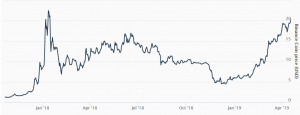
In either case, BNB, the native token of Binance, jumped by more than 4% in the past hour (05:22 UTC), moving above USD 20 per coin and getting closer to its all-time high (USD 22 – USD 24, according to various sources,) reached in January 2018. However, BNB broke its all-time high against BTC in February 2019.
BNB price chart:
 Source: messari.io
Binance chain testnet was released for public testing in the end of February, while their Binance DEX exhange, that prompted heated debates how decentralized it is, is one of the first applications that run on the native blockchain of the exchange. Binance DEX is still in the testnet mode.
Meanwhile, in February, Changpeng Zhao said that some of the coins that currently run on the Ethereum network as ERC20 tokens (BNB including) are ready to migrate to Binance Chain as soon as it goes live.
“Right now we already have about half a dozen projects confirmed, very large, existing, established projects running on ERC20 tokens, they have confirmed that they will move to Binance Chain when the chain becomes available, because they don’t use any of the fancy smart contract features, it’s just a token platform for them. Our platform is faster than Ethereum, is cheaper to transfer, and hopefully we’ll have large liquidity as well […] Hopefully after we launch the testnet and that ends, we’ll see more projects switching over,” the CEO said back then.
The use of Binance Chain makes it possible to send and receive BNB and other tokens, issue new tokens, propose trading pairs, and use orders to buy or sell assets through the aforementioned trading pairs. Most of this is possible because the traders are the ones in charge of their own transactions, leaving custody to the investor.
Since its testnet launch, Binance Chain underwent two software upgrades. This includes four major feature updates, new SDKs (software development kits) in four coding languages, and more, according to the exchange. Also, new features has been added to the web wallet for Binance Chain, including mobile support.

