


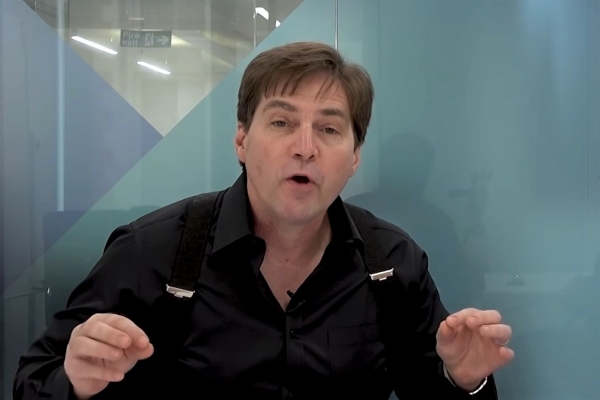
In what was a baffling move to many cryptofans, Craig Wright, who claims to be Satoshi Nakamoto, creator of Bitcoin, has filed registrations with the U.S. Copyright Office and has been granted U.S. copyright registrations yesterday for the original Bitcoin white paper and Bitcoin code (version 0.1).
What this essentially means is that these registrations, “Bitcoin: A Peer-to-Peer Electronic Cash System” and “Bitcoin,” recognize Wright, under the pseudonym Satoshi Nakamoto, as the author of the white paper and code. What it does not mean, however, is that this type of registration indicates either ownership or official patent. According to the U.S. Copyright Office, Computer code and white papers can be copyrighted as long as they are considered literary works. The office just registers a person as an author of a work, but does not investigate its accuracy.
In either case, Bitcoin SV (BSV), the Bitcoin Cash fork backed by Wright, doubled in value following the news, before correcting lower. At pixel time (15:33 UTC), it trades at USD 104, or 69% more than 24 hours ago.
Jerry Brito, executive director at Coin Center, a crypto-focused research and advocacy center, and Emin Gün Sirer, professor at Cornell University and founder and CEO at blockchain startup Ava Labs, discuss this further in their respective tweets.
Registering a copyright is just filing a form. The Copyright Office does not investigate the validity of the claim; they just register it. Unfortunately there is no official way to challenge a registration. If there are competing claims, the Office will just register all of them. https://t.co/YA70ALpG1Y
— Jerry Brito (@jerrybrito) May 21, 2019
The distinction between "Copyright office recognizes person X as author" versus "Copyright office witnesses that person X is claiming to be the author" is subtle. If someone doesn't understand the law, they'll get confused.
— Emin Gün Sirer (@el33th4xor) May 21, 2019
There have been numerous debates about who stands behind the pseudonym Satoshi Nakamoto, and once Wright began claiming it was him, skeptics nicknamed him ‘Faketoshi’ as he failed to provide any proof of this. Given such heated discussions, people reacted quickly to this news as well, and some have even given finding the true Satoshi another try.
sadly didn't find anything. It won't matter because I'd put the odds of a successful faketoshi copyright lawsuit at 0%. Still its fun to dig through Bitcoin history.
— Peter Van Valkenburgh (@valkenburgh) May 21, 2019
Damn!!! My lawnmower mechanic was going to file a copyright for the same paper next week. I told him he should have acted sooner. pic.twitter.com/SeTarGauD4
— John McAfee (@officialmcafee) May 21, 2019
Trademark is similar. That’s why I laugh when people act like registering a trademark is like registering a patent and they need to do it early and take it really seriously…
— Michael Sevarino (@oldmanjingles) May 21, 2019
He continues to use the media to run his cons targetting specific individuals (not wide audiences)…and people making a lot of publicity for him are helping him out.
— Eric Lombrozo (@eric_lombrozo) May 21, 2019

